
The entryway is one of the most-used, yet minimally-considered rooms in many homes. It is the first thing you see when you walk in and the last thing you pass on your way out. It can be viewed as an afterthought instead of a prime design opportunity. A well-designed entry sets the tone for the entire home, and because it is usually small, thoughtful changes go a long way without a big budget.
The Big Impact of a Small Space
Before anyone sees your living room or your kitchen, they experience how you transition from the outside world into your space. A calm, organized entry can help set the tone for the rest of the house.
Aside from aesthetic appeal, having an intentional entryway also establishes a feeling of balance and organization. Walking into a cluttered, chaotic entry after a long day sets a frazzled tone before you have even taken your coat off. Walking into a clear, welcoming one does the opposite.
The Real-Life Entrance
A common mistake when shaping an entryway is designing for how you wish you lived instead of how you actually live. Before choosing a single finish, track your own habits for a week. Where do the keys really land? Where do the shoes pile up? Which door does the family actually use? What else happens at the entry both inside and out? For me it’s where we go to grab an extension cord, a broom or a shovel when heading outside. We have a pile of “work shoes” separate from daily shoes. Not glamorous but if we better consider how we actually function, the space can meet us there.
For many midwest homes, the true entry might not be the pretty front door at all. It could be the side door off the garage or the back door into the kitchen. Design for the door you use! Placing function first and beauty second will provide the best result, and the two will end up reinforcing each other.
Designing to Weather the Winter
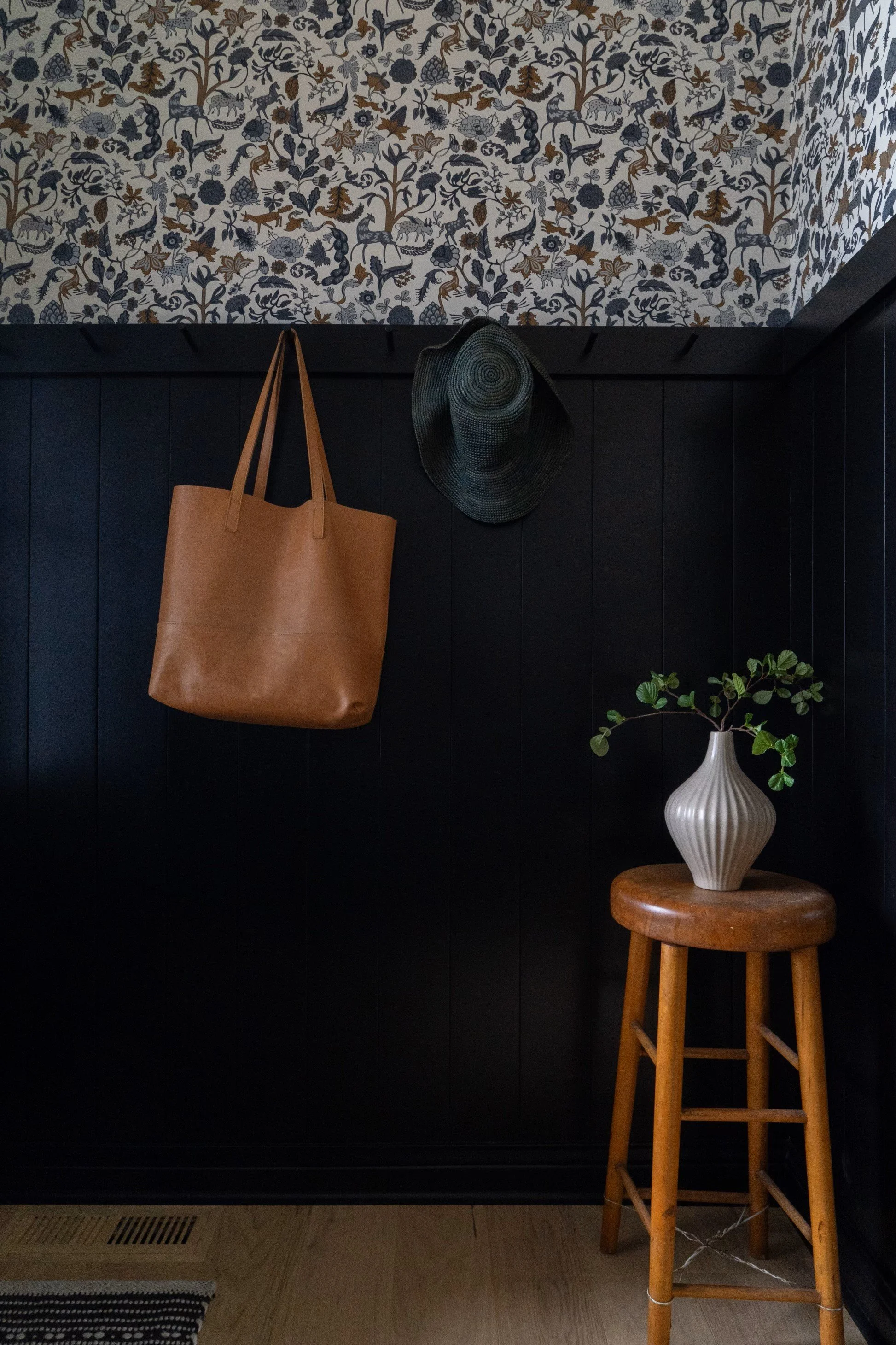
Here in Minnesota, the entryway is definitely not purely decorative. It holds infrastructure and function. For five or six months of the year it has to absorb salt, slush, snowy boots, and wet mittens. That means durable, cleanable flooring, a generous mat or boot tray, and a way to contain and organize wet gear so it dries instead of making a continual mess on the floor. Plan for the worst week of winter and the space can feel effortless the rest of the year.
An Intentional Place for Everything
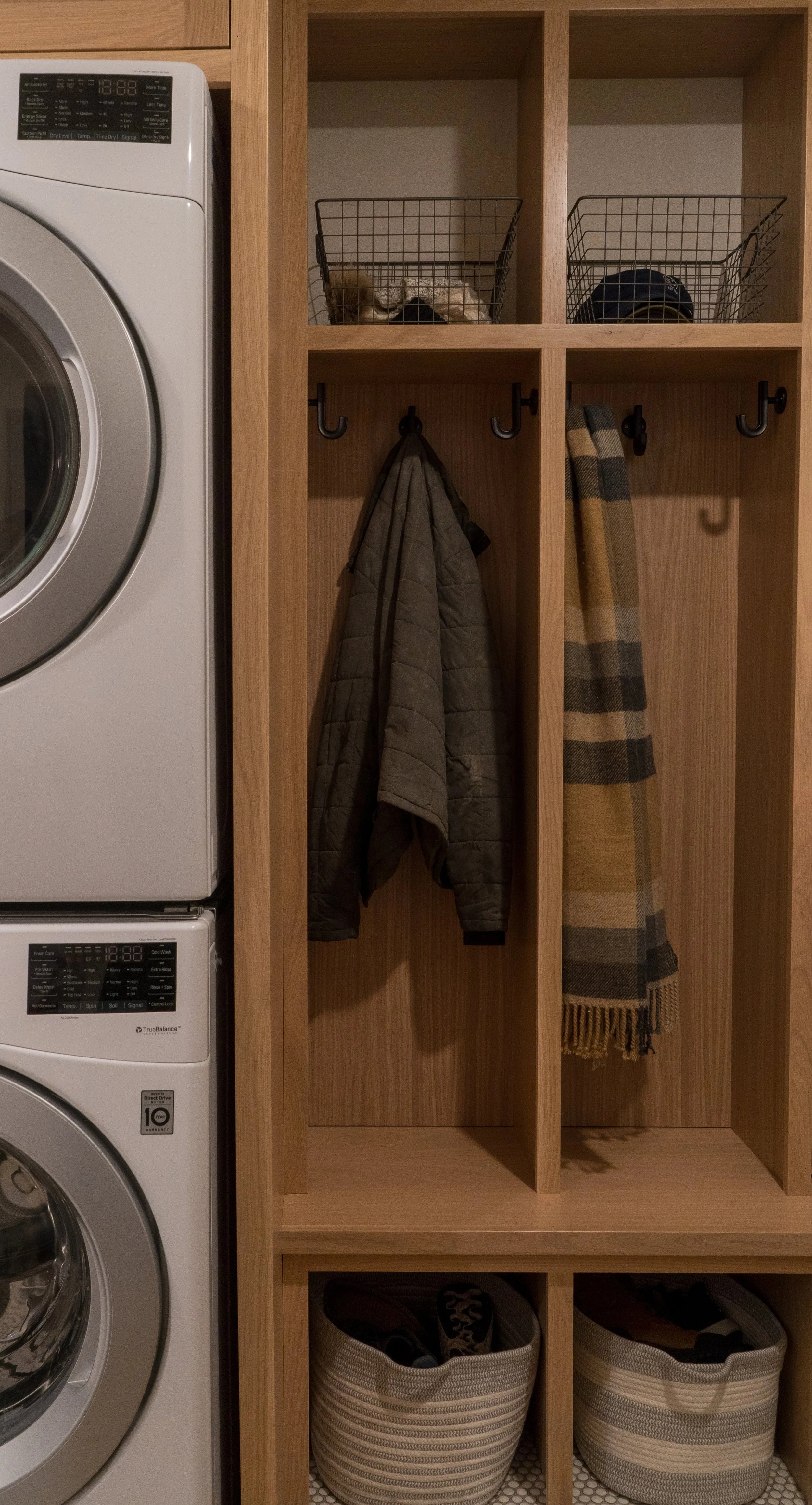
The secret to an entry that stays tidy is simple: every object that comes through the door needs a home. Keys, mail, sunglasses, the dog leash, the bag you grab on the way out. When those things have a designated spot, they stop migrating to alternate, less intentional areas of the house.
A few pieces can do a lot of the work here. A bench or stool to sit and pull boots off. Hooks at multiple heights to accommodate different sized objects and people. A narrow console or floating shelf for daily items. And, if feasible, closed storage to conceal anything you want out of sight..
Bringing in Light
Entryways, at their worst, can be dim and windowless, or lit by a single overhead fixture. Layered light is a great solution; a warm overhead source for general light, plus a small lamp on a console or a sconce by a mirror, turns a dark passage into a place that actually greets you. A mirror can reflect the light you have deeper into the space, and provides a last look before you head out. It can also make a tight entry feel larger.
Choosing Materials & Furniture
Because the entry takes more abuse than most other spaces in the home, it’s important to prioritize durability. Finishes that wear well and can be cleaned easily will save you from replacing things, which is better both for your budget and for the planet.
An entry is a great spot for a fun statement piece. An ornate antique mirror, a sculptural bench, or a richly patterned runner brings instant warmth and character to the space.
Why It Matters
The entryway proves that good design is not about square footage, it’s about attention. A few well-chosen pieces, finishes that can handle everyday use, and thoughtful consideration for how your household actually moves in and out can transform the smallest room in the house into one that works hard and welcomes you home.
