
Material Health with Habitable
When walking into a room, you notice how it looks and how it makes you feel. The light, the color, the furniture pieces, the artwork on the walls. Most people rarely think about what the surfaces and products in the space are actually made of.
A Different Kind of Question
Much of design is about how a material performs and how it looks. We ask questions about the durability of the flooring, the warmth or coolness of a paint option, and the composition of a fabric. These questions matter, but there is an entire set of questions sitting underneath them. What is this product made of, and what is it doing to the air, the people, and the planet over its lifetime? These questions are harder to answer and easy to set aside. But we invite you to think about the health of your space just as much as the look of it.
Why It Matters
The materials that go into a home are not passive. They have an impact throughout their whole life, from how they are produced to how they are installed to how they live in your space to how they are eventually scrapped. Material impact reaches the people who live with the material every day, the workers who install it, and the communities where it is made and disposed of. Perkins&Will
For most people, the part that lands closest to home is the air you breathe. Some finishes release chemicals into the air long after the installation is finished, while others are largely inert and do their job with little impact on the health quality of the space. From across the room, the two can look identical. The difference is in what you cannot see.
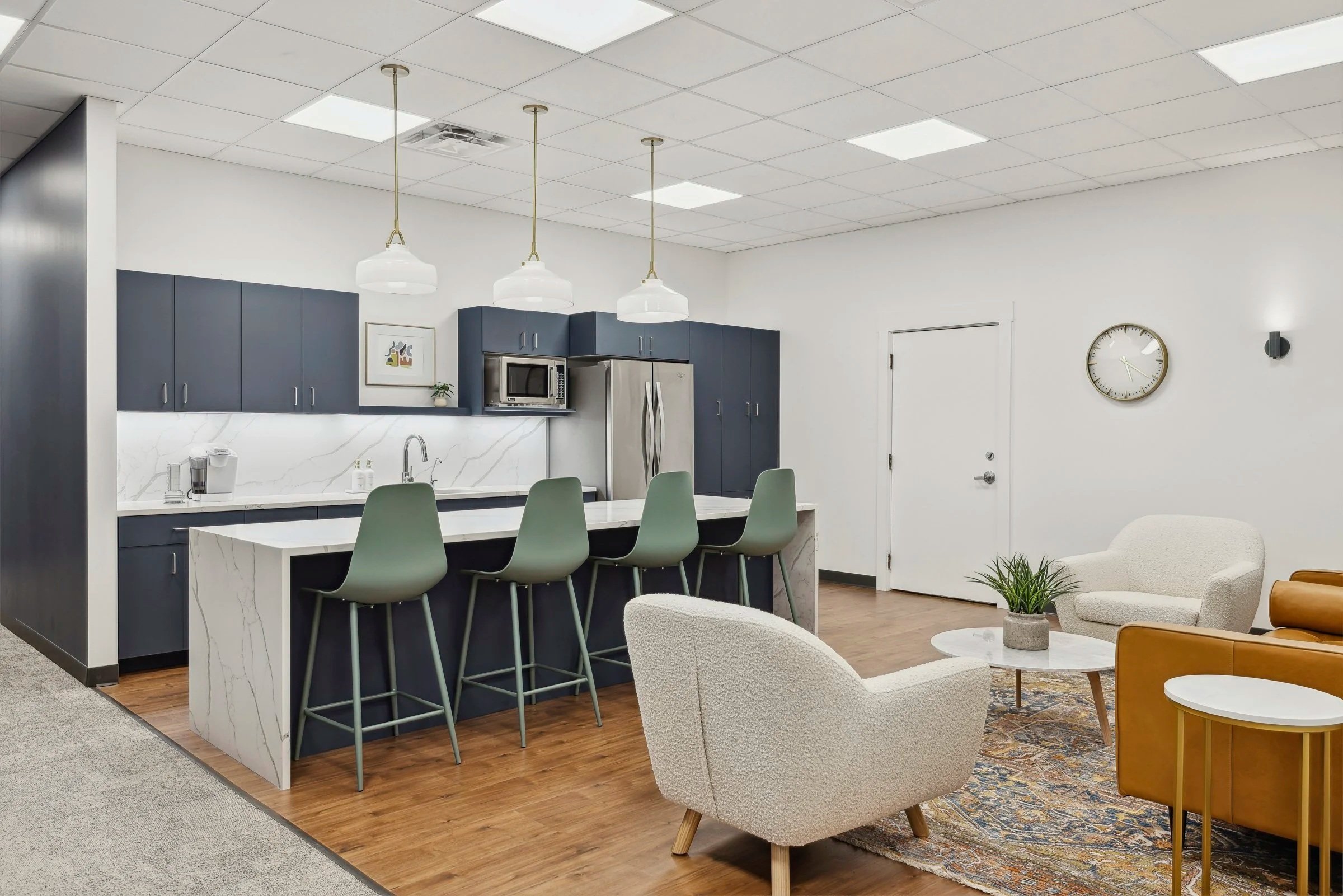
Photo by Spacecraftng
No Need for a Chemistry Degree
The good news is that you do not need to be an expert chemist to make better choices for your indoor environment.
We recently spent time learning about material health from Habitable, a nonprofit that has spent decades studying what is actually inside the products we build with. They created a system called Informed that ranks building product types on a simple red-to-green scale, based on their chemical hazards and life cycle impacts. Their first initiative is “Step up from Red” which means choosing products that fall into the yellow and green sections instead of the red. Habitable + 2
This tool is great because it supports how good design already works while making it more accessible and understandable for everyone involved in the process. There’s no need to know everything, you just understand enough to avoid the worst options and aim for the better ones.
Minnesota Data
One of the things that struck us is how close this work is to home. A good deal of Habitable's research is built on Minnesota housing data, and Minnesota Housing is already folding this guidance into its standards for healthier homes, especially when it comes to affordable housing.
More Than Meets the Eye
A space should take care of the people in it. Not just in the obvious ways, like the comfort and the warmth and the way it supports daily life, but in the under-the-surface ways as well. The air you breathe. The surfaces you touch. The things you are naturally surrounded by every day.
That more subtle layer has always mattered. We are advocating for closer attention to be given to it, and we believe that doing so helps create the best possible space. If you are planning a project and want to think through healthier material choices alongside the beautiful ones, we’d love to be part of the conversation.