
Designing Small Spaces
There's a tendency to talk about small spaces as a problem to solve, in which the square footage is treated as something to work around rather than with. However, some of the most beautiful and functional homes we've worked on are also some of the smallest. A compact bungalow in South Minneapolis or a limited downtown studio can feel just as gracious as a home twice its size. It simply requires a different kind of intentionality.
The goal within a small space is to make it feel generous. Generosity in a home comes from the amount and quality of light, thoughtful sightlines, breathing room around furniture, and the understanding that every square foot is doing something by design.
Floor Plan First
The biggest influence in a small home is almost always the floor plan, not the finishes. We've walked into plenty of 1,400 square foot homes that felt cramped because they were divided into seven small rooms, and others that felt expansive because someone had thoughtfully removed a wall or two.
You don't need an open concept, and we're actually moving away from those in a lot of our recent work. What is necessary is a layout where the rooms make sense for how the space is actually lived in. That might mean combining a formal dining room you never use with the living room, taking a few feet from an oversized primary bedroom to give your kitchen a real pantry, or relocating a powder room to make better use of a long, narrow hallway.
Before any client invests in a renovation, we spend significant time asking whether the plan's framework is actually serving them.
Sightlines Are Everything
When you walk into a room, your eye travels to the furthest point it can see. If that point is six feet away (a blank wall, a closed door, the back of a sofa), the space feels small. If your eye can travel thirty feet across a room, through a doorway, and out a window to a tree in the backyard, the same space feels expansive.
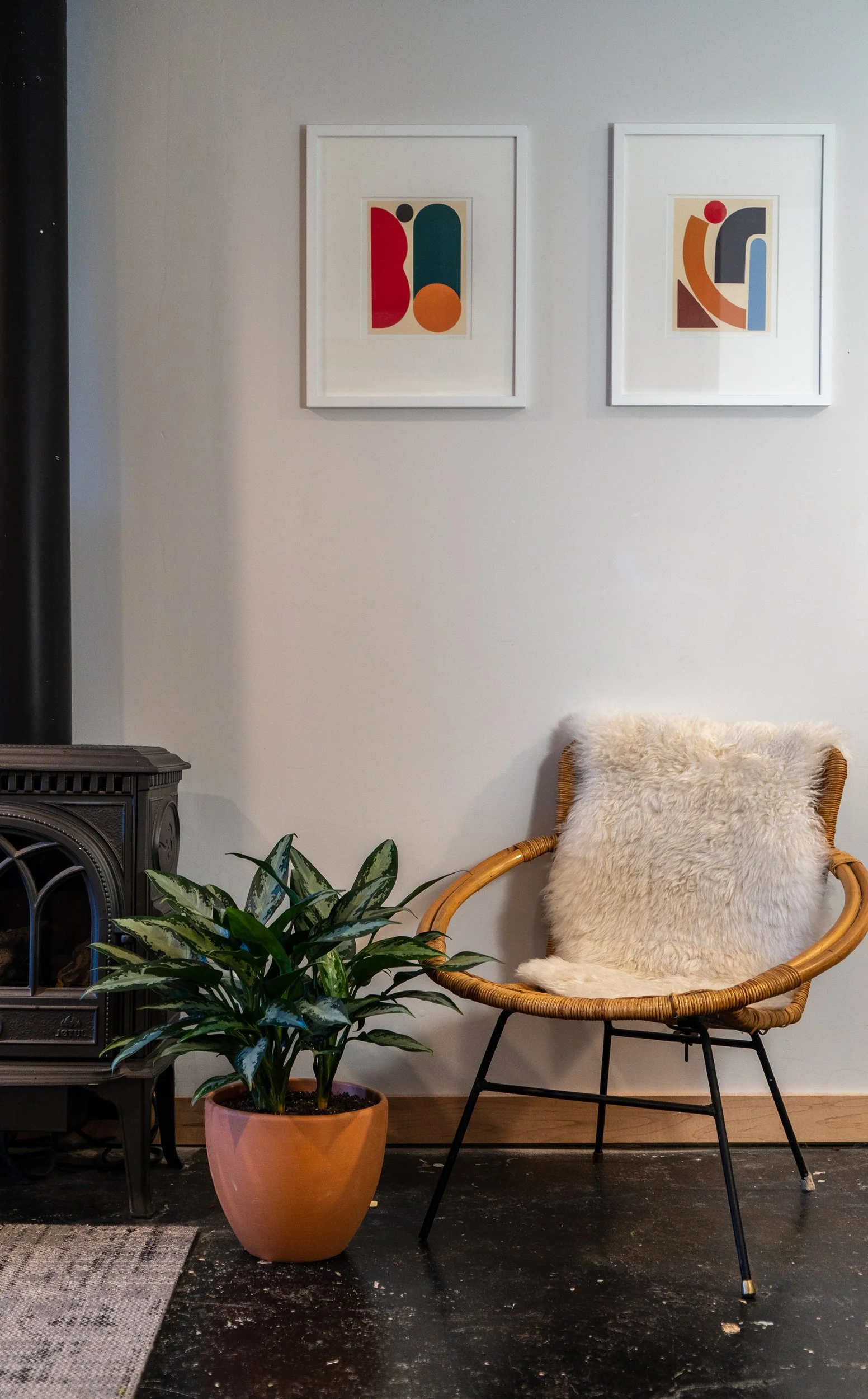
In a small home, protecting and extending sightlines are among the highest-leverage things you can do. A few moves we lean on: aligning doorways so you can see from one end of the home to the other, lowering the back of a sofa so it doesn't visually block the room behind it, using pocket doors where they make sense, and being deliberate about what sits at the natural endpoint of every sightline. That spot should hold something worth landing on, like artwork, a window, a beautiful piece of furniture, or a built-in bookshelf.
Built-Ins
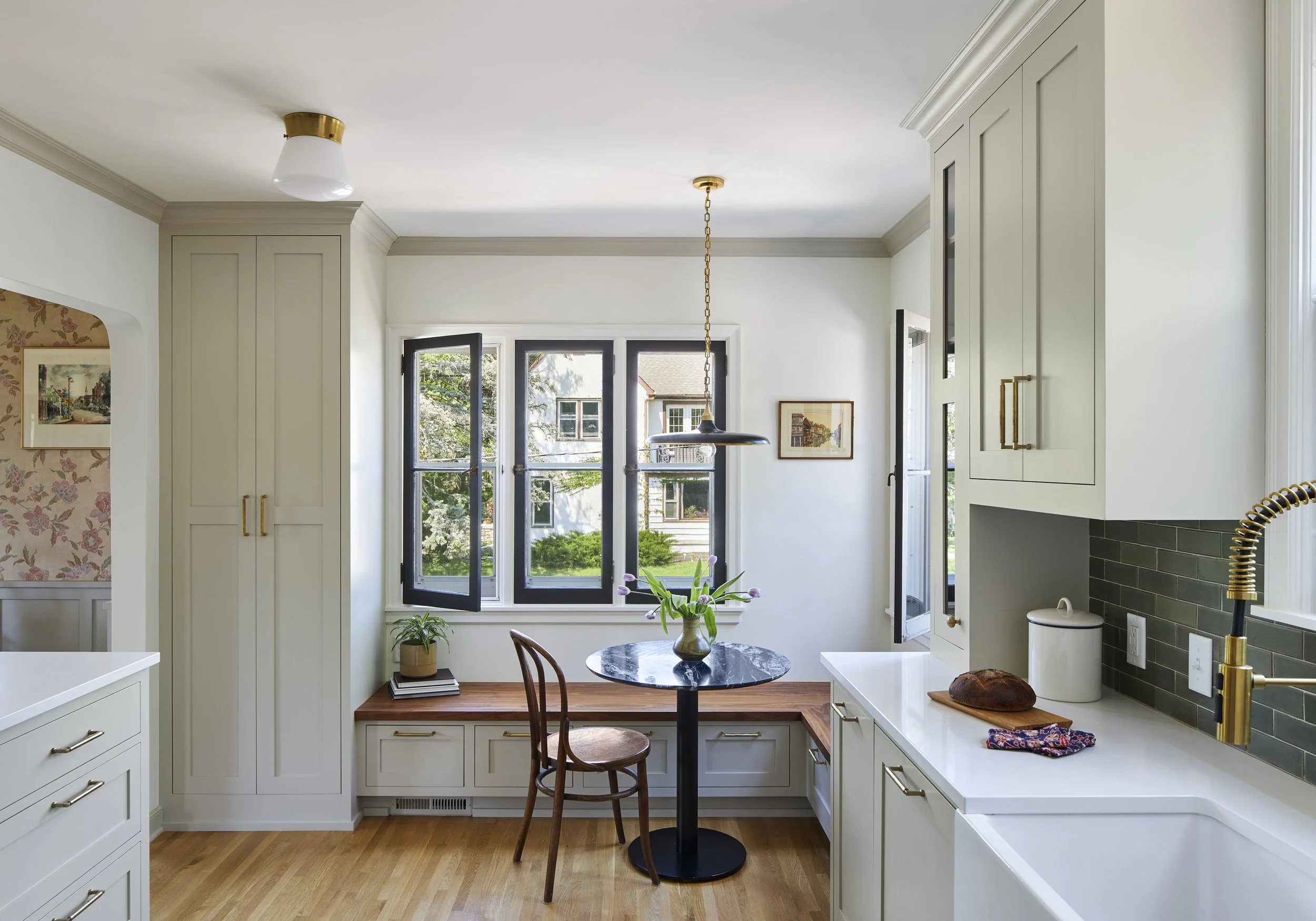
Built-ins can be a great opportunity to provide multi-purpose solutions that maximize square footage. A window seat with drawers underneath offers seating, storage, and a moment of architectural interest in a small footprint. Floor-to-ceiling cabinetry, painted the same color as the wall, can serve as an organized display while reading as quiet architecture rather than furniture. Banquettes in a dining nook seat more people in less space than chairs ever will, and the bases double as storage for serving pieces or board games.
Dual-Purpose Furniture
Furniture that does two things gets a bad reputation because so much of it is designed poorly. The sleeper sofa that's uncomfortable as both a sofa and a bed or the ottoman with a hinged top that pinches your fingers and only fits a few throw blankets
Done well, dual-purpose furniture disappears into the design. A dining table that extends from four seats to ten when the family comes for Thanksgiving or a guest room that functions as a daily office with a Murphy bed that doesn't look like a Murphy bed. The key is buying fewer, better pieces from manufacturers who design for both functions, not big box convertibles that compromise on both.
Materials
Small spaces often suffer from too many finishes competing for attention. Three flooring transitions, four wall colors, two countertop materials, and a handful of metal finishes in 800 square feet can read as overwhelming.
The fix is the opposite of what people expect. Use fewer materials, and use them generously. Running the same white oak flooring through the kitchen, living room, and hallway makes the whole footprint read as one continuous space. Continuing a wall color up onto the ceiling can make a low ceiling feel taller. Carrying a backsplash tile from the counter all the way to the ceiling, instead of stopping at the cabinets, adds interest and an unexpected element to the space.
Light
A 600 square foot studio with abundant natural light and a thoughtful lighting plan feels infinitely more spacious than a 1,500 square foot ranch with one overhead fixture per room.
Natural light can be maximized by keeping window treatments minimal or sheer, and by using lighter, warmer wall colors that allow light to bounce around. Layering ambient, task, and accent lighting enables the space to shift moods throughout the day. Areas where natural light doesn’t reach aren’t to be neglected; a small lamp in a corner that would otherwise sit in shadow makes a room feel meaningfully larger because it pushes the visual edge of the space outward.
Photography by Nate Anderson
Portland Avenue Kitchen
In our Portland Avenue kitchen project, we worked within the constraints of the 1930s Four-Square home with an existing kitchen footprint of 150 square feet. In an effort to create a connection between the kitchen and dining area, we created an intentional opening between the two spaces, allowing a larger space for gathering, conversations, and daily activities. We brought the kitchen cabinets to the ceiling and designed a built-in bench, with storage below, to maximize every square inch available. The space is bright and open while still feeling appropriate to the era of the home.
Why It Matters
Many of the homes in Minneapolis and the surrounding suburbs are modest in size. Post-war bungalows, mid-century ramblers, 1920s four-squares, and the smaller new builds going up in city neighborhoods. These homes aren't lacking; they just need to be designed with intention and purpose.
If you're in a smaller home and wondering whether design investment is worth it, we'd argue it matters even more than in a larger one. Every decision carries outsized weight because there's less room for things that don't work, so what you choose has to earn its place. If you’re looking for a Minneapolis interior designer, we’d love to connect with you about your small space!