
When someone tells us they want their space to "feel more connected to nature," their first instinct may be to incorporate large, leafy plants. This can be a great start, but biophilic design, the practice of designing spaces that strengthen our connection to the natural world, is so much bigger than what might be sitting in a terracotta pot on your console table.
Real biophilic design works through materials you can touch, light that shifts with the day, sightlines that pull you outside, and the subtle presence of natural patterns and sounds throughout a space. Done well, it can lower stress, improve focus, support better sleep, and make a space feel like somewhere you actually want to be. Especially here in Minnesota, where we spend many months indoors and need our interiors to do more emotional heavy lifting.
Here are some of the ways we consider biophilic design that go beyond a plant.
Textures
One of the most overlooked elements of biophilic design is tactile material. Smooth, machine-perfect surfaces dominate modern interiors, but human nervous systems respond to imperfection. Hand-troweled lime plaster, raw-edge wood, unfilled travertine, woven jute, linen with visible slubs, and natural wool all carry the kind of variation our eyes and hands are wired to find calming, interesting, and appealing.
We often layer a few of these in a single room. A plaster wall behind a storied white oak bench, paired with a wool rug and a linen-upholstered chair, gives you four distinct natural textures in one sightline without anything feeling busy. It draws you in and feels grounded because every surface has depth.
Light
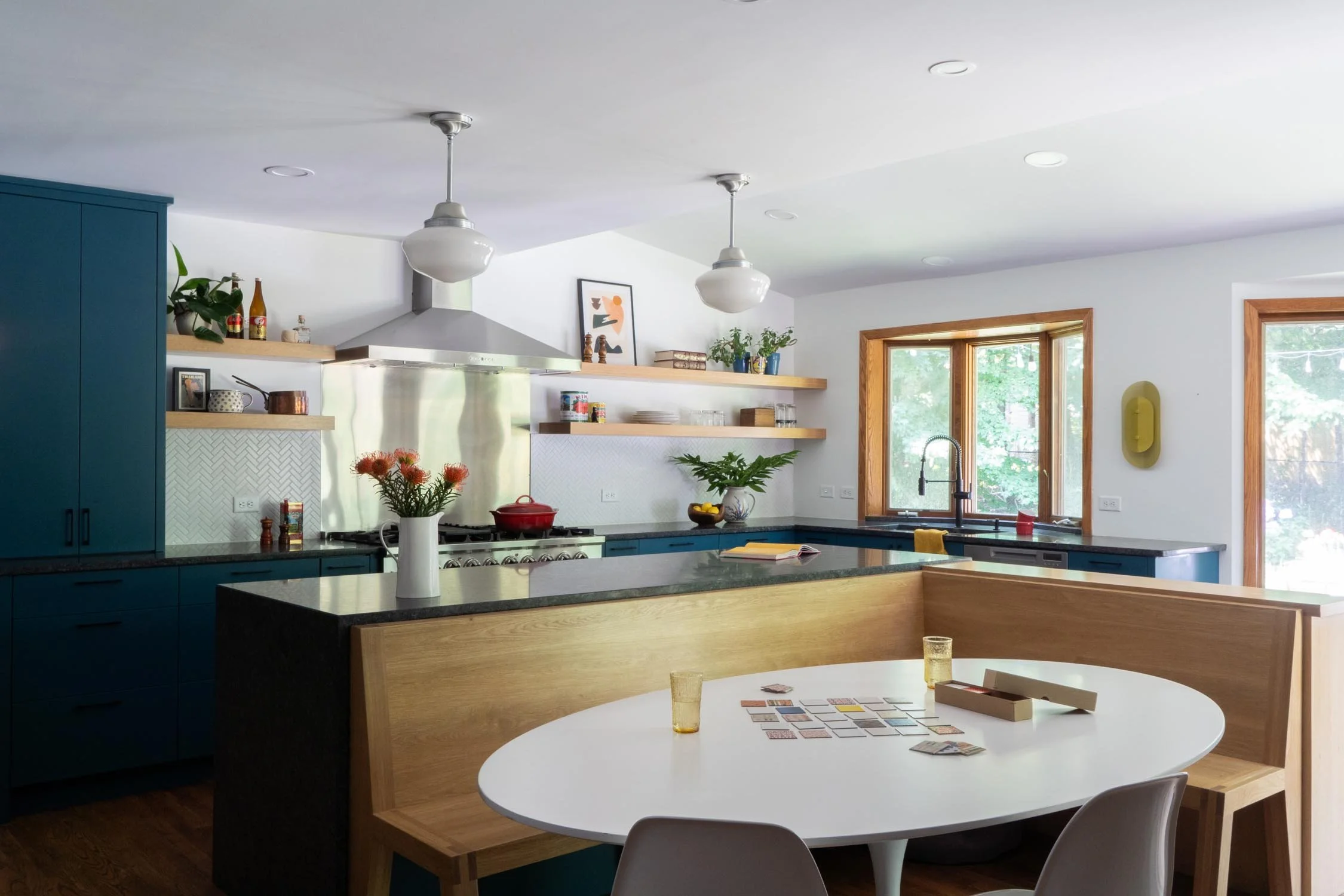
Natural light is an extremely powerful tool in biophilic design, and many spaces, especially homes, use it poorly. Heavy window treatments, deep overhangs, and rooms laid out without considering sun path can leave you with a house that never quite feels right for the functions and ambiance you most want.
Practical Strategies
Prioritize south and east-facing windows in rooms where you spend morning and daytime hours. The warm, shifting light is exactly what your circadian rhythm wants. For west-facing rooms, layered shades can soften intense late-afternoon sun without blacking it out entirely. Skylights or solar tubes in interior hallways and bathrooms can completely transform spaces that could otherwise feel cave-like or lack orientation. And when natural light isn't an option, full-spectrum and warm-dim LEDs can mimic the shifting qualities of daylight in a way standard bulbs simply can't.
The goal is light that changes throughout the day. Static lighting is one of the fastest ways to make a beautiful space feel lifeless.
Views & Outdoor Connection
Biophilic design researchers talk about something called "prospect and refuge," the idea that humans feel best in spaces where we can both see out and feel sheltered. A reading nook tucked beside a large window looking onto a garden is a textbook example. So is a kitchen sink positioned to look out onto trees instead of a solid wall.
When we plan a renovation, we consider what's outside each window, the direction the windows face, and how natural light will come through during different times and seasons. Even in dense urban settings, a thoughtfully placed window with a view of the sky or a mature tree can impact the feel of a room.
For homes with usable outdoor space, blurring the line between inside and out is one of the most impactful things you can do. Wide sliders or folding doors, continuous flooring from interior to patio, and aligned ceiling materials all make a space feel larger and can pull the outdoors into daily life.
Honest Materials
There's a reason a stacked stone fireplace or an exposed timber beam feels different than a printed laminate version of the same thing. Real materials have density, temperature, and irregularity that our brains pick up on instantly, even if we can't articulate why.
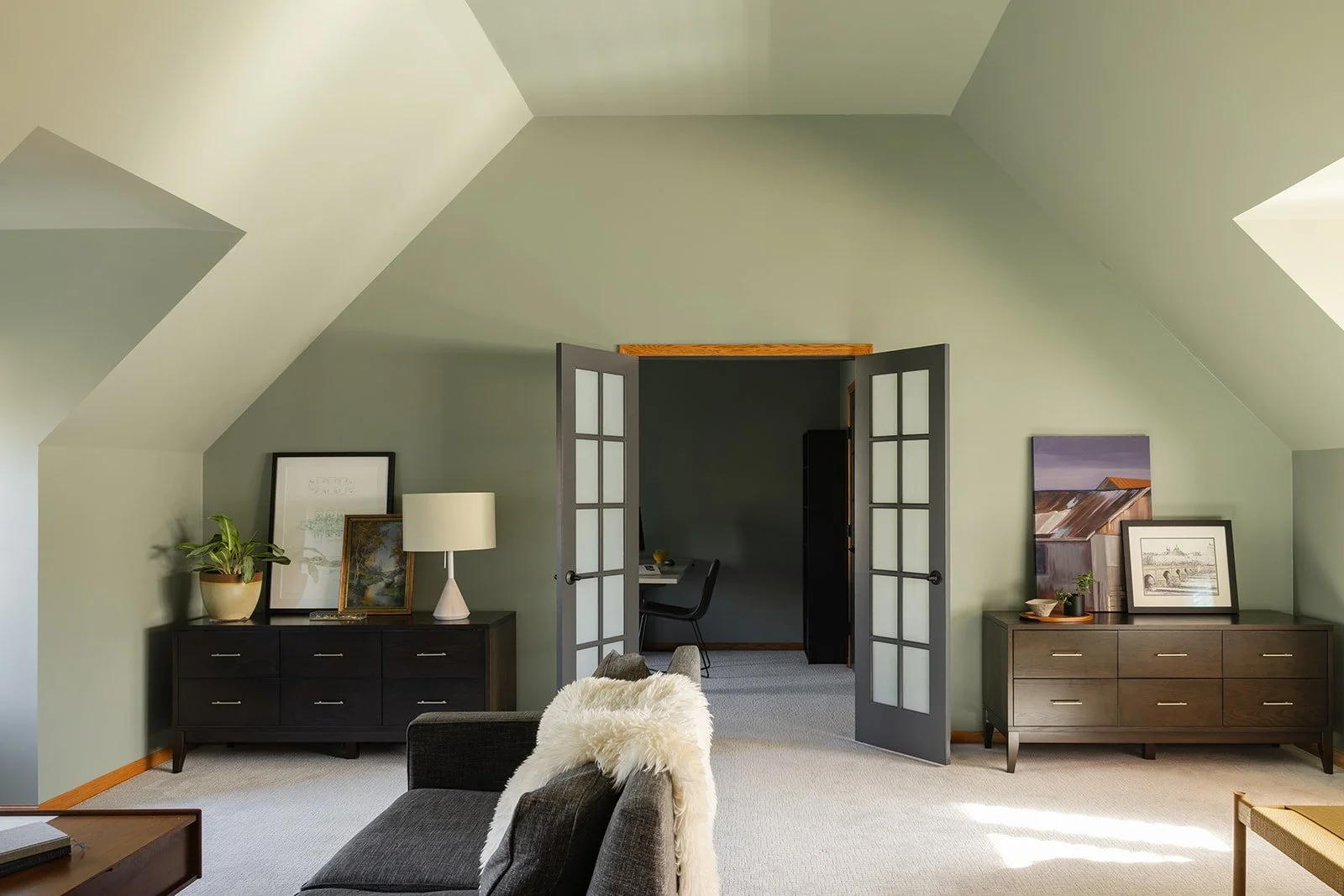
When a project calls for a grounded, earthy feel: unfilled or honed limestone, wood with knots or stronger grain patterns, hand-made or glazed tile, natural stone, unlacquered brass or copper that will patina over time, leather and natural fiber wall coverings like grasscloth or paperweave. Natural materials have a lived-in quality that draws people in and provides beauty that ages over time.
Photography by Audrey Christine
Project Example: Improving Views
In our Chanhassen Family Home project, there was an existing sliding door that gave redundant access to their deck with dark wood blinds that stayed shut most of the time. We decided to mirror the windows at the front of the home to allow daylight to come through the space. Repositioning the openings now allows views to the backyard and kids playing, in addition to a view of the deck. Adding curtains on the sides of the windows relieved the heaviness of the wood blinds, while still allowing visual privacy when they choose.
Why It Matters
Biophilic design is a way of thinking about how a space supports the biology of the people inside it. When you build in real texture, honest materials, quality lighting, and a strong connection to any nature that exists outside your walls, you end up with a space that feels natural and filled with ease.
If you're planning a renovation or new build and want to think through how your space could support you in deeper ways, that conversation is one of our favorite places to start. Let’s go beyond green design and create something uniquely you.