
Designing for Longevity
Most of us don't think about how we'll move through our homes in twenty or thirty years. We're focused on how the space looks and feels right now. The countertop finish, the cabinet hardware, and whether the layout flows the way we want it to. But decisions you make during a renovation or new build today can either support or work against you later. Considering how long you plan to be in your space is an important factor influencing design decisions and your investment.
Aging in place, the ability to remain in your own home as your needs change, is something the majority of older adults say they want. According to a recent Pew Research Center poll, most older adults who live at home prefer to stay there. But as Ann Forsyth, a professor of urban planning at Harvard's Graduate School of Design, points out, wanting to age in place and being set up to do it successfully are two very different things.
Thoughtful design can bridge that gap, and it doesn't have to look or feel like a compromise.
The Tension with Design for Aging
One of the most interesting design challenges for aging in place is the balance between accommodation and vitality. Professor Forsyth describes it well: you have to weigh the cost for potential physical changes, wider doorways, single-floor living, grab bars, against the value of an environment that still offers some challenge and meaning. Stairs are a good example. Remove them entirely for ease of mobility, and you may eliminate a source of incidental daily exercise that helps maintain physical capacity over time. Keep them without any potential alternative, and you've created a real barrier down the road.
This is where design becomes deeply personal, and why working with a designer who listens to your goals and gets to know you matters. There's rarely a universal answer. The solution often depends on your health, your household, your home's structure, and how you want to live.
What Most Homes Are Missing
Research from the North Central Region Aging Network highlights just how unprepared most existing homes are for aging residents. Features like lever-style door handles and faucets, wide hallways and doorways, no-step entries, accessible electrical controls, and single-level bedroom and bathroom access are absent in the majority of homes. And yet these are exactly the features that allow people with changing mobility to navigate their space independently.
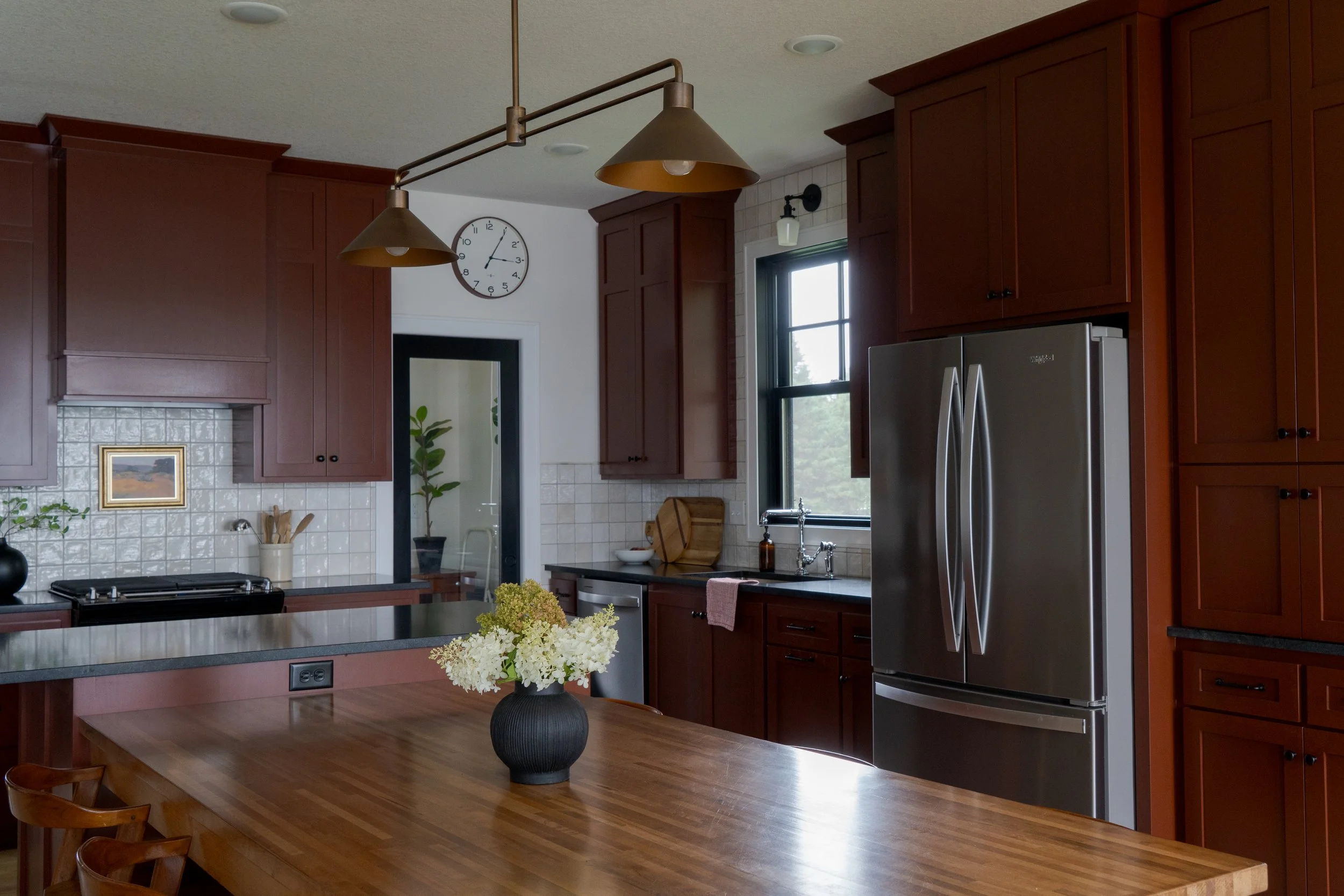
What's more, the spaces we use most intensively, such as kitchens and laundry rooms, are often among the least accommodating. Routine tasks, like meal preparation, can become difficult when counters, storage, and appliances aren't designed with accessibility in mind.
The concept of Universal Design offers a useful framework here. Developed by Ron Mace, Universal Design is about creating spaces that work for a wide range of people and abilities, not as an afterthought or add-on, but as part of the design from the start. The goal is an environment that doesn't need to be retrofitted later because it already works for you at every stage of life.
Where to Focus
Here are the areas we think about most when working with clients on aging-in-place design:
Entryways and thresholds: A no-step entry is one of the single most impactful changes you can make. Even a small threshold can become a significant barrier with a walker or wheelchair. If you're renovating your entry or building new, this is worth prioritizing.
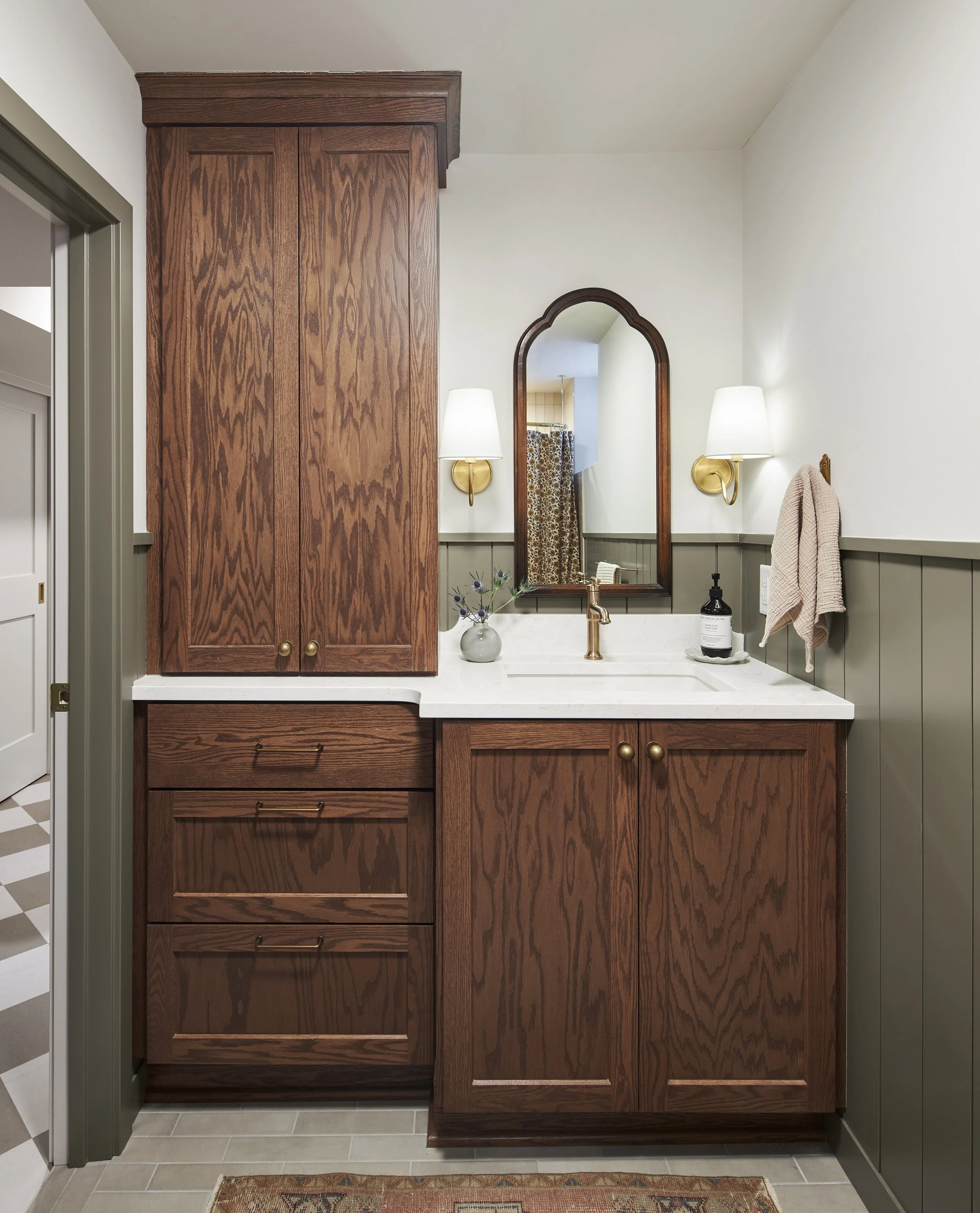
Bathrooms: This is where falls happen most often, and where thoughtful design pays the biggest dividends. Curbless showers, reinforced walls for future grab bar installation (even if you don't install them now), wider doorways, and comfort-height toilets are all worth considering. You can pair all of these choices with beautiful materials to create a holistic and intentional design that accommodates many stages of life.
Kitchens: Pull-out drawers instead of deep lower cabinets, and clear floor space under sections of the counter all support aging in place without sacrificing aesthetics.
Lighting: We've written before about how much lighting affects how a home feels and functions. For aging in place, well-layered lighting is especially important as it reduces fall risk, supports low-vision needs, and helps regulate circadian rhythms, which become more important as we age. Motion-activated lighting in hallways and bathrooms can add safety without requiring any behavioral change.
Flooring: Smooth, low-pile flooring is easier to navigate with mobility aids. Area rugs are beautiful ways to add softness and pattern to a space, but depending on the thickness and pad, they can create trip hazards depending how they are located and arranged with furniture and circulation paths.
Stairs: If your home is multi-level and you're planning a major renovation, it's worth thinking about whether your home could function on a single floor if needed, or whether it's feasible to add a bedroom, full bathroom and laundry on the main level. These aren't always possible, but when they are, they may extend how long a home can work for its occupants.
The Case for Being Proactive
One of the clearest findings in the research on aging and home design is that waiting to make accessibility modifications reduces their effectiveness. By the time a change becomes urgent, the person making it may be managing other challenges simultaneously, which is the wrong time to navigate a construction project. Decisions made under pressure are almost never the best ones. Modifications made as part of a planned renovation, are less disruptive, less expensive per change, and more likely to be intentionally integrated into the overall design.
Changes made during a renovation such as wider doorways, blocking for future grab bars, curbless shower pans can add relatively little cost when they're part of the original scope. The same changes made after the fact, tearing out finishes and reworking structure, can cost significantly more.
Our Approach
At Bound Collaborative, we consider aging-in-place and Universal Design with all clients to some extent. You don't have to be planning forty years into the future to benefit from these design choices. Often, it’s making decisions that allow for easy modifications or additions in the future.
We believe the best spaces are ones that support you across your whole life, not just right now. And we've found that when Universal Design is considered from the start, it doesn't show up as accommodation. It shows up as good design.
If you're starting to think about a renovation and want to factor in long-term livability, we'd love to talk.
Sources
- Aging Independently, by Design (https://news.harvard.edu/gazette/story/2026/03/aging-independently-by-design/) — Harvard Gazette, March 2026
- Architectural Barriers to Aging in Place (https://ncran.org/architectural-barriers-to-aging-in-place/) — North Central Region Aging Network