
Our practice is rooted in the belief that the built environment shouldn't just be built. It should be thoughtfully constructed, mindfully sourced, and designed for disassembly or decomposition at the end of its life. The range of projects we work on provides different opportunities to delve deeper into what we’re specifying for a space, from how it’s made to how it’s installed, to how it performs, and how people experience it.
Part of our commitment to our clients is staying in a state of discovery and curiosity. Whether they are brand-new innovations hitting the market or new-to-us gems we’ve recently integrated into our library, we’re always excited to learn about materials that can shape a more environmentally positive and healthy future.
Here’s a look at some materials we’re currently exploring:
High-traffic Carpet Made with Goat Hair
Tretford carpet is made with Mongolian cashmere goat hair, instead of your standard synthetic pile. It’s naturally resilient, acts as a carbon filter for indoor air, and comes in an array of colors. The unique ribbed texture offers a structural look that feels both heritage and modern.
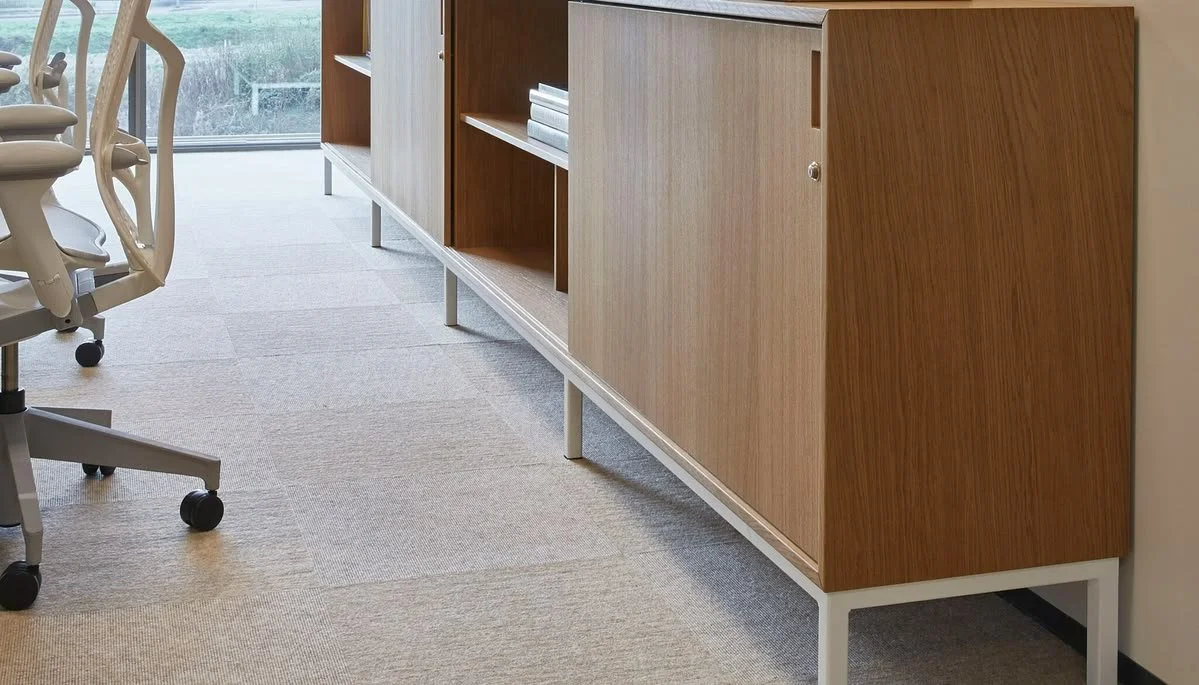
Image Source: Tretford Carpet
Recycled Glass Countertops
Recycled glass surfaces (like those from Vetrazzo or IceStone) offer a depth and luminosity unlike those of Quartz designs currently all over the market. By diverting glass from landfills and binding it in VOC-free resin or cement, these countertops become functional mosaics with a story of circularity. They also avoid the significant health concerns posed by Silica particulate.
EcoSmart Sheetrock
We’ve recently heard more about EcoSmart Sheetrock, which is engineered to use significantly less water and energy during manufacturing, and its lighter weight reduces the carbon footprint of transportation. It’s the same high-quality wallboard, improved, and it may be the only Gypsum base with a Declare Label.
Liquid Linoleum
Most people think of linoleum as sheets or tiles, but "liquid" linoleum is a new-to-us way to think about high-traffic flooring. Poured in place like a resin or epoxy, it is actually a bio-based product made from linseed oil, cork flour, and limestone. It creates a perfectly seamless, hygienic, and resilient floor that feels soft underfoot.
Hempcrete Insulation
Hempcrete (a mixture of hemp hurds and lime) is one of our favorite new Minnesota innovations for insulation. It is breathable, mold-resistant, and fireproof. Most importantly, it stores more carbon than is emitted during its production, making it a carbon-negative choice for the building envelope. It’s being championed locally by the Lower Sioux, creating incredible ecological and economic impact in the home building industry, and it was recently adopted into the Minnesota Building Code.
Living Walls
Moss walls and plant walls were a major design trend of the last decade. Organoid surfaces were recently introduced to us as a two-dimensional interpretation of plants on the wall. They take raw natural materials including Alpine hay, rose petals, moss (and more) and press them onto self-adhesive backings or acoustic panels. We love the color, texture, and natural elements they bring to a space.
Lime-Based Paints
Lime-based paints and Roman clays offer a soft, matte, mottled finish that develops a patina over time. Beyond the aesthetics, they have a high pH, which makes them naturally antimicrobial and antifungal, improving indoor air quality.
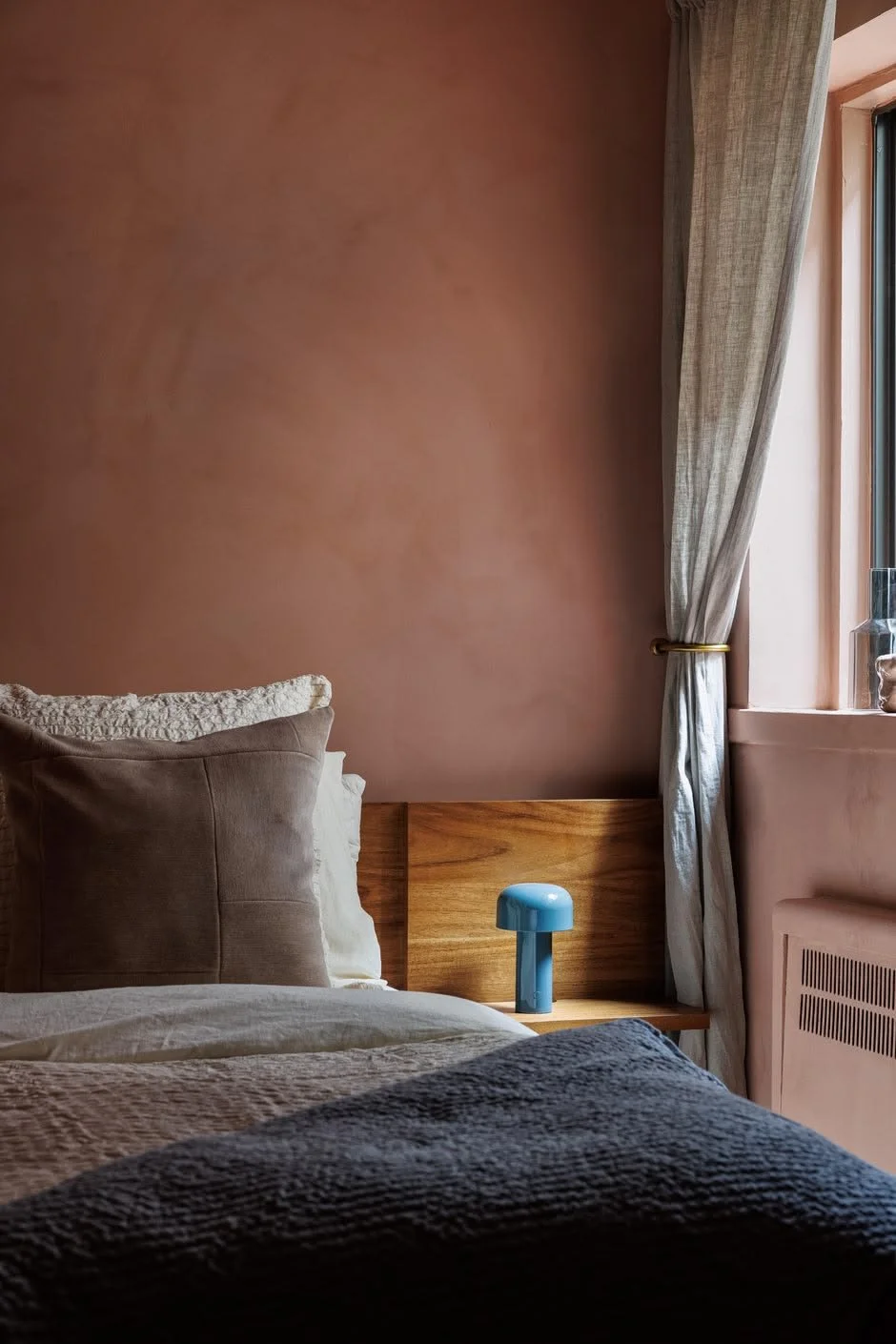
Image Source: Portola Paints
Full-Spectrum Light Bulbs
LEDs have become our go-to light bulbs with their efficiency and long lifespan, but recent innovations are improving their color rendering and color temperature to mimic the wavelengths of natural sunlight better. The cool light of LEDs is not well received by the human body both physically and psychologically, but warm-dim and full-spectrum technology can now better support the body’s circadian rhythm to improve sleep, mood, and productivity.
Why It Matters
There is an abundance of information and marketing that oversells materials that aren’t actually that sustainable or healthy. We research and use tools to find materials that lead us all forward, recommending them because they are better for your health, better for the artisan, and better for the longevity of the built environment.