
At Bound Collaborative, we believe every space—whether it’s a family home, an office or a neighborhood café—should feel beautiful, relaxed, and deeply supportive of the people who experience it. Our work spans both residential and commercial interiors, and while the goals of these environments can differ, the heart of our approach stays the same: listen closely, design intentionally, and create spaces that are good for people and the planet.
Working across both markets gives us a unique perspective on how design shapes daily life. Homes nurture us, relieve us, restore us. Commercial spaces provide services, engage us, and connect us. Both space types gather us for different purposes, and deserve thoughtful, human-centered design.
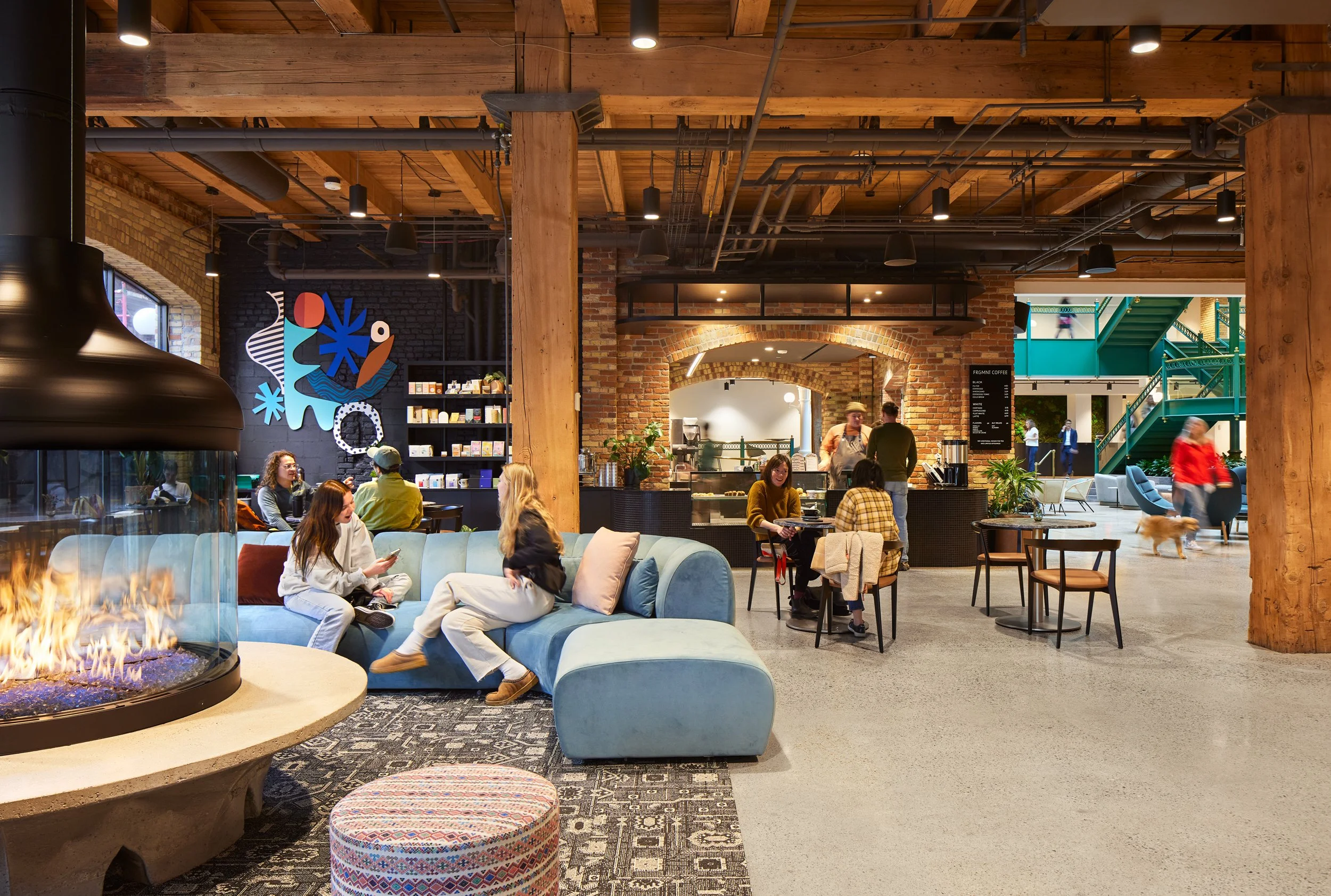
Photo by Corey Gaffer Photography
Where Commercial and Residential Design Overlap
Even though the end uses vary, we find that the foundations of good design are remarkably consistent across project types.
People Come First: Whether we’re designing a living room or a lobby, we begin by understanding the people who will inhabit the space. What are the goals? How do they move? What do they value? How many people should the space support? Good design is empathetic, a foundation built by listening.
Function Shapes Form: A space must work beautifully before it can look beautiful. In both residential and commercial projects, we focus on spatial relationships, flow, ergonomics, lighting, and material performance. When the functional layers are strong, the aesthetic layers can shine.
Materials Matter: We design with long-term health in mind—of the client, the community, and the environment. That means prioritizing durable materials, responsible sourcing, and choices that reduce waste. Whether it’s a family choosing natural fiber carpet or a business investing in high-quality finishes, sustainable decisions always pay off.
Storytelling Through Materials: Every project has a narrative. In homes, it’s often personal history, lifestyle, family, and travels. In commercial spaces, it’s the brand identity and guest experience. In both space types, we use color, texture, and form to tell the client’s story with clarity and warmth.
Where Commercial and Residential Design Diverge
The differences between these project types engage us and challenge us in ways that keep us learning and growing.
Scale and Durability: Commercial spaces experience heavier use, so materials must be exceptionally durable and easy to maintain. Residential design allows for more tactile softness and personal detail. We love toggling between these scales—one sharpens our technical expertise, the other deepens our sensitivity to comfort.
Codes, Compliance, and Complexity: Commercial projects involve accessibility requirements, life-safety codes, and coordination with larger teams. Residential projects are complex in different ways, like custom millwork profiles and details. Designing homes offers more flexibility, uniqueness, and intimacy. Each requires a different mindset, and we enjoy what each project type offers for our creativity.
Emotional vs. Experiential Goals: Homes are deeply emotional spaces. Clients want to feel safe, inspired, and connected to their personal style. Commercial spaces must communicate a brand, support business goals, and create a memorable experience for guests. Designing for both keeps us attuned to the full spectrum of human needs.
Why We Love Designing Both
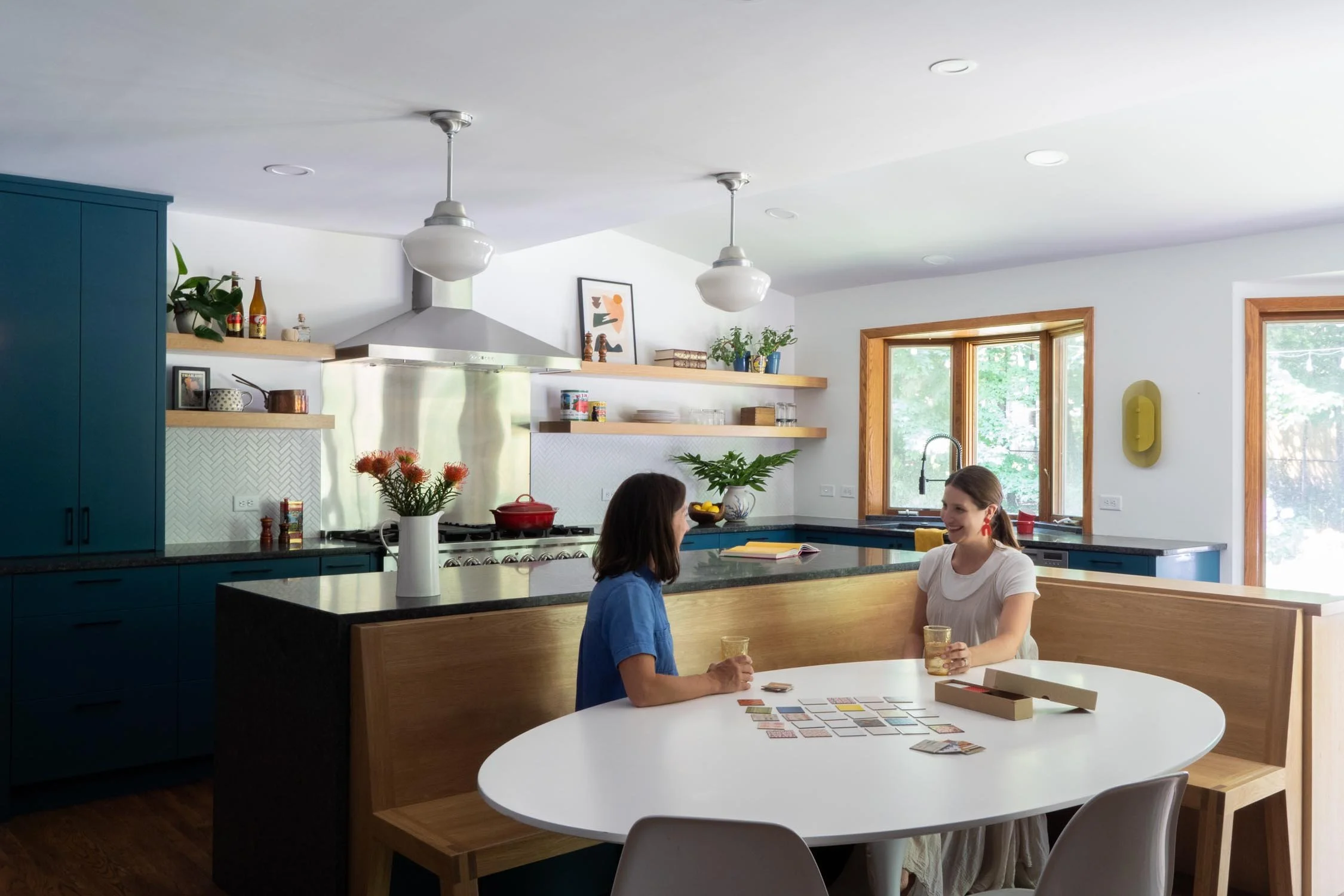
Working in both markets enriches our practice. Residential projects remind us how meaningful the small moments are—morning routines, family gatherings, quiet evenings. Commercial projects remind us how design can shape community, support innovation, and spark connection. As a small business, we love getting to know and support other local businesses.
Each informs the other. A hospitality project might inspire a more welcoming kitchen layout. A residential project might influence a softer, more human approach to a workplace breakroom.
Good design is a conversation, a collaboration, and we love being part of it.
At the end of the day, our goal is simple: create spaces that feel good to be in. Spaces that support wellness. Spaces that age gracefully. Spaces that reflect the people who use them and the planet we all share.
Whether we’re collaborating with a homeowner or a business owner, we bring the same curiosity, care, and commitment to thoughtful design. That’s the heart of Bound Collaborative—and it’s what makes this work so rewarding.